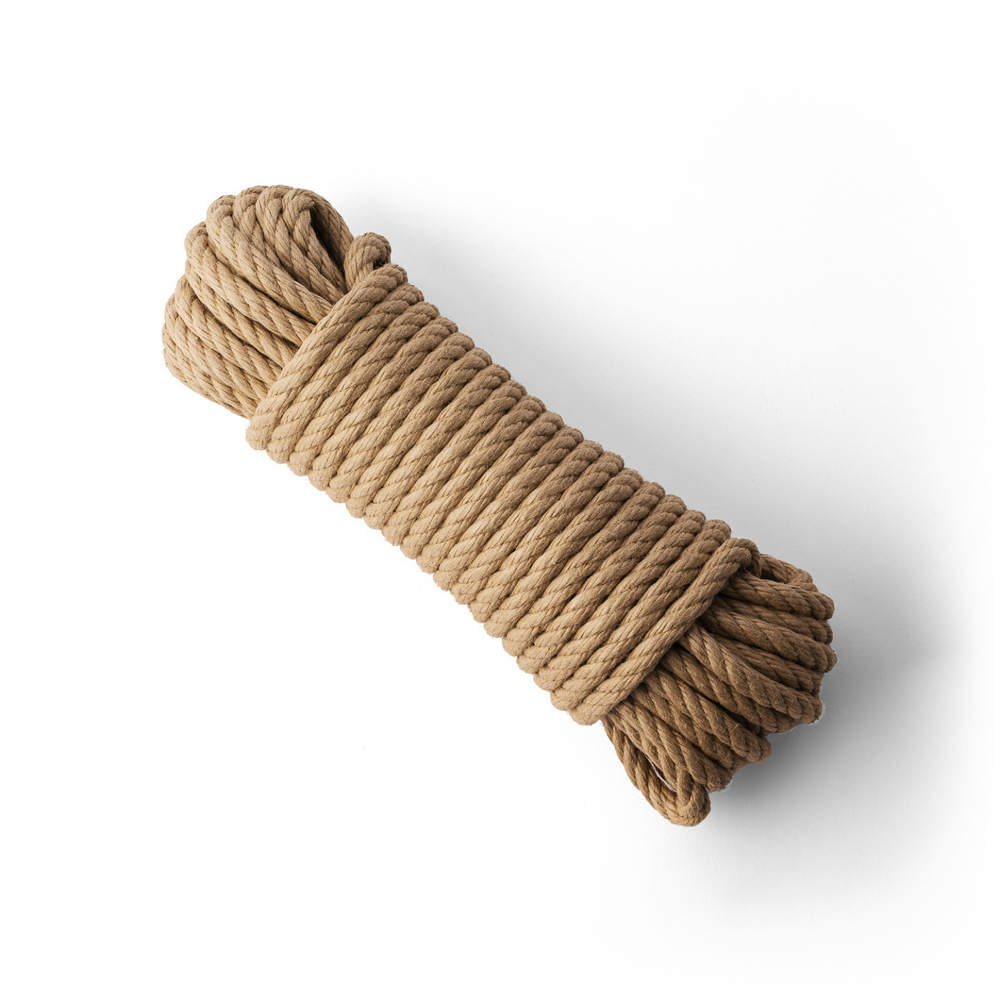
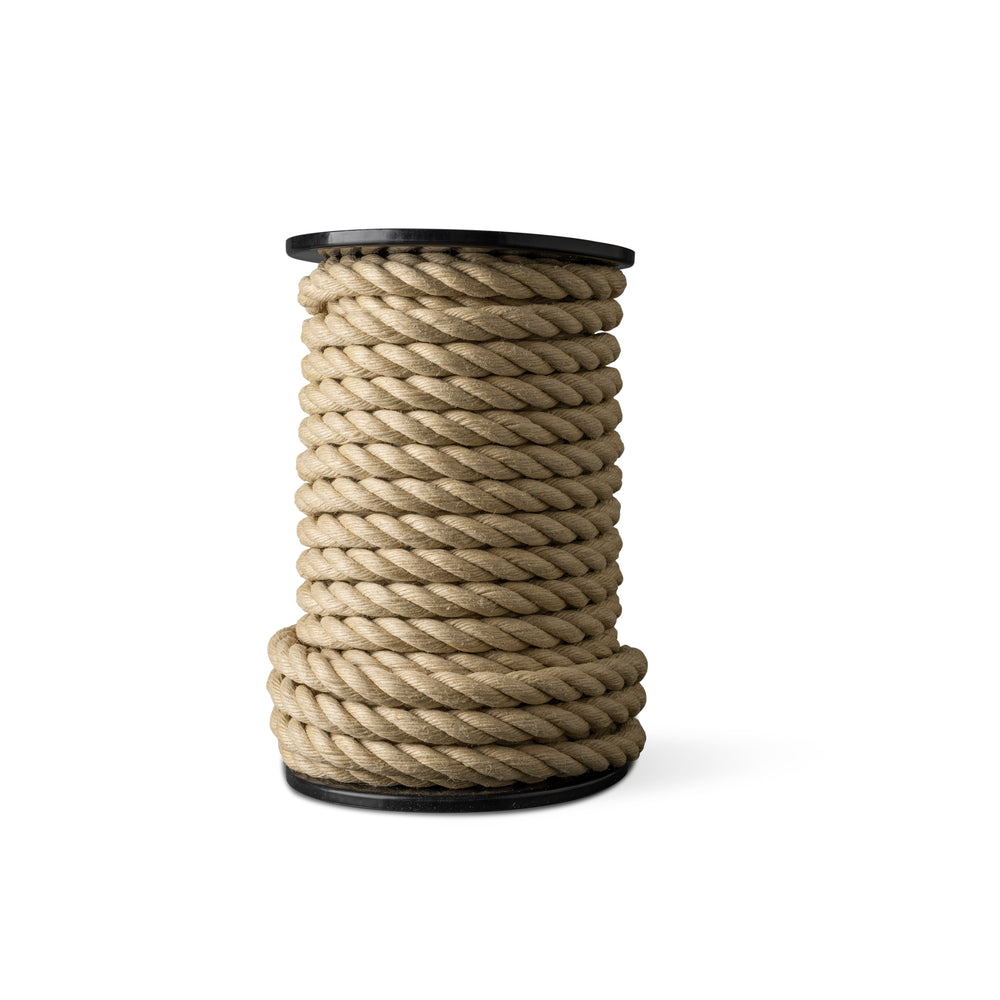
Hempex, Polyhemp, Synthetic Hemp, Spleitex, and Vlastex are different names for the same type of synthetic rope. They are produced from polypropylene (PP) using a special spinning and twisting process that provides a soft, natural look that closely resembles hemp or flax. Unlike natural rope, this type of rope is rot- and mildew-free, UV- and weather-resistant and much more durable for outdoor use. Due to its comfort and natural look, it is particularly suitable for swings, decorative outdoor use, and fences.
Anyone looking for a soft, natural-looking rope for outdoor use will quickly come across names like Hempex, Polyhemp, Synthetic Hemp, Spleitex, or Vlastex. But do these names really mean something different? And which rope should you choose for swings, play equipment, fences, stand construction, or decorative outdoor use?
In this rope guide, we explain the difference clearly and practically, so you can make the right choice for your application.
Is there a difference between Hempex, Polyhemp, Vlastex, Hemp tex, and Synthetic Hemp?
The short answer: there is no difference.
Hempex, Polyhemp, Hemptex, and Synthetic Hemp are different names for the same type of rope. They all refer to a synthetic rope made from polypropylene (PP), but produced in such a way that it strongly resembles natural hemp rope.
While the appearance is natural, this rope offers all the advantages of plastic:
- it does not rot or mold
- it is weather-resistant
- it requires little maintenance
- it has a longer lifespan than natural hemp or flax
- with correct production, it is also UV-resistant
This type of rope is widely used for swings, decorative applications, fences, and other outdoor applications. If you want to combine a natural look with durability, this rope is an excellent choice.
What are Spleitex and Vlastex?
The name Spleitex is often used for synthetic flax rope, but SpleitexTM is actually the name for the yarn from which synthetic flax is made. Vlastex refers to flax, it is the Dutch term for synthetic flax but is identical to Hemptex or Polyhemp.
Hempex, Spleitex and Vlastex are technically identical ropes.
They are all made from polypropylene and get their natural look through a specific production process. The difference is therefore not in the basic material, but in the name and any finishing.
Why is the production method more important than the name?
Not every synthetic rope feels the same. The production technique determines whether a rope:
- feels soft or hard
- is suitable for swings
- is comfortable to the touch
- looks truly natural
Therefore, it is more important to pay attention to the quality of production than to the name Hempex, Spleitex, or Vlastex.
What production techniques exist for twisted PP rope?
1. Plain twisted PP rope (split film)
This type of rope is made from so-called split film. Thin layers of plastic are cut and frayed into a net-like structure. This is then spun into yarn and subsequently twisted into rope.
This results in a strong and inexpensive rope, but it feels hard to the touch. For applications where comfort is important, such as swings, this rope is not suitable. Sliding hands along this rope can cause friction and even minor burns.
2. PPM-rope (multifilament polypropylene)
PPM-rope is made from a large number of thin filaments (threads) that are twisted together to form a strand. Multiple strands are then twisted into a rope.
This rope is:
- very smooth and flexible
- exceptionally strong
- comfortable to use
It is primarily used as marine rope, such as anchor lines and docklines. However, its appearance is less natural than Hempex-rope.
Discover our PPM marine rope soon, ideal for anchor lines and docklines.
3. Spun PP yarn: Hempex, Spleitex and Vlastex - synthetic rope with a natural look
For this rope, multifilament is also used, but with additional production steps. The filaments are first cut into short fibers and then re-spun into a single yarn. This is exactly the same method as with natural ropes such as sisal and flax. This spun yarn (SpleitexTM) is then twisted into rope.
The result is a rope that:
- feels soft to the touch
- has small protruding fibers that give a natural impression
- is less strong than PPM rope, but more pleasant to use
This makes it very suitable for swings, decorative outdoor use, and for those who want to splice or braid the rope (for example, to make a loop or eye). Due to the extra production steps, this type of rope is slightly more expensive than standard polypropylene rope.
View our Hempex or Vlastex range here.
Key properties of synthetic hemp rope
- natural appearance
- soft to the touch
- floats on water
- rot-free and mildew-free
- weatherproof and UV-stable
- easily spliced for eyes and braiding, for example
- lower breaking strength than standard twisted polypropylene rope
Conclusion: when to choose which type of rope?
|
Application |
Recommended rope type |
Diameter |
Why |
|
Swings, play ropes, parcades |
8 -12mm |
Soft to the touch, comfortable for hands, natural appearance |
|
|
Decorative outdoor use, fencing |
12-30mm |
Natural look, weather-resistant, rot‑ and mildew-free, low maintenance |
|
|
Theatre, stage and stand construction |
8-24mm |
Durable, low maintenance and visually natural |
|
|
Maritime use (anchor‑ and mooring ropes) |
PPM rope |
8-12mm |
Very strong, supple, excellent water resistance |
|
Budget applications |
4-16mm |
Strong and economical, but less soft |
For outdoor applications where appearance, comfort and durability are key, Hempex, Spleitex and Vlastex are the best choice. The name is less important than the production method, softness and finish of the rope.
For those who want to be sure of quality and the right advice, it is best to choose a specialized rope supplier with knowledge of synthetic hemp or flax ropes.